
Ocean Life Quotes: 140+ Inspiring Sayings About the Sea
20/10/2026
Marine Archaeology: Discover the History Hidden Beneath the Sea
28/10/2026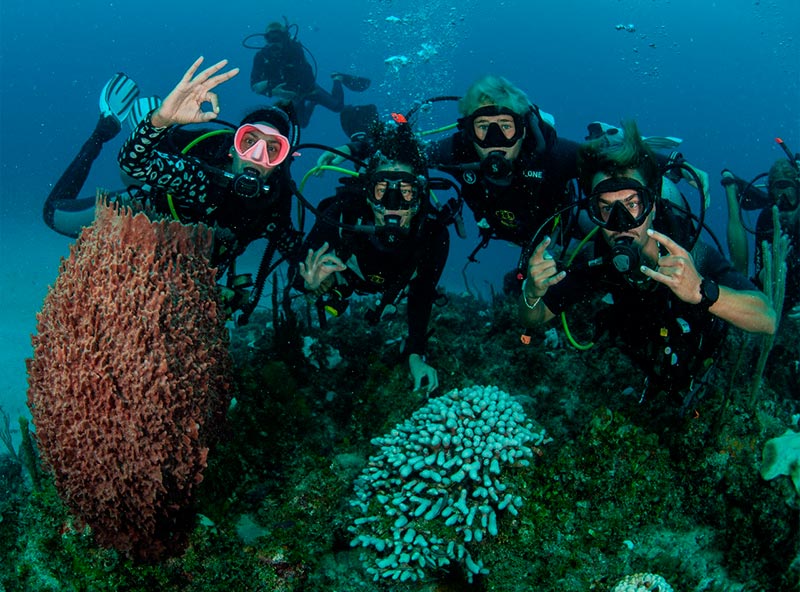
Quick answer: Yes, kids can go family scuba diving, most agencies allow a Discover Scuba Diving experience from age 8 and a Junior Open Water certification from age 10, with depth limits that increase with age. Non-divers can snorkel alongside the group at the same reef. The Caribbean, Cozumel, Riviera Maya, Jamaica, and the Dominican Republic, is widely considered the best region for family diving holidays thanks to calm, shallow, shore-accessible reefs.
Family diving in the Caribbean is one of those once-in-a-lifetime experiences you’ll never forget.
Picture the scene.
There are five of you. You and your two older children put on your fins, adjust your regulators, and perform the classic “giant stride” from the boat.
Splash. Straight into the turquoise blue of the Caribbean.
Little Annie follows from above. She’s with Dad and their snorkeling guide, calmly floating on the surface with her mask and snorkel. She’s part of the adventure too.
You descend to the reef. You take your first breaths through the regulator, and suddenly, time slows down while your heart races with excitement.
Next to you, your 14-year-old son Johnny is your dive buddy. You look at each other. Exchange an OK sign with your hands. Everything’s good.
In the distance, Mary is already snapping photos. Her dive buddy is Paul, the guide. Camera ready, pointed at a hawksbill turtle gliding past the lens. Click. A picture worthy of a frame.
From the surface, Annie watches you all, smiling inside her mask. She knows she’s part of something special, holding Daddy’s hand.
This is family diving. And the best part: you can also live this experience with your own family. For example, on our excursion to Cozumel. But let’s not get ahead of ourselves.
In this guide, you’ll find out exactly what family diving is, what a Scuba Diving experience actually involves, how accessible is it really, what non-divers can do while the rest of the family dives, where the best family diving destinations in the Caribbean are, and how to plan the whole trip from start to finish.
Let’s dive in.
What you’ll find in this article:
- What Is Family Diving and How Do You Get Started?
- Is Family Diving Safe?
- How to Choose a Family-Friendly Dive Center
- The Benefits of Family Scuba Diving
- What Can Non-Divers Do While the Family Dives?
- The Caribbean: A Family Diving Paradise (with Comparison Table)
- Diving with Grandparents: A Multigenerational Adventure
- How to Plan a Family Diving Holiday, Step by Step
- FAQs About Family Diving

1. What Is Family Diving and How Do You Get Started?
Family diving simply means the whole family experiences scuba diving and snorkeling together, with each person participating at their own level. It is a way to share underwater adventures, learn new skills, and create lasting memories during the same vacation.
Expert Tip: “I’ve seen hundreds of families take their first steps underwater. The most common mistake parents make is pushing their children to ‘learn quickly.’ My advice: focus on having fun, not on technique. When a child feels like they’re exploring a ‘pirate treasure’ (the reef) instead of attending a swimming lesson, their confidence soars. That’s the magic of learning in the Caribbean, where 100-foot visibility makes everything feel like a giant aquarium.” — Sergio, Senior Instructor at Dressel Divers.
For families who want to become certified divers, the usual starting point is a SDI o PADI Junior Open Water certification. Most training agencies allow children to begin at age 10, making it possible for parents and kids to earn their certification together.
Here’s what the course typically includes:
- Academic sessions covering the fundamentals of scuba diving, safety procedures, and underwater communication.
- Confined-water training where students practice essential diving skills under instructor supervision.
- Open-water dives that allow students to apply their new skills in real diving conditions.
- Upon successful completion, participants earn a globally recognized scuba certification.
For younger children or family members who are not yet ready to commit to a certification course, a Discover Scuba Diving experience can be an excellent introduction. This supervised program allows complete beginners to try scuba diving under the direct guidance of a certified instructor, without earning a certification.
As children grow and gain experience, certified junior divers can continue their underwater education through Junior Advanced and Junior Rescue courses.
2. What safety measures are applied in family diving?
Like any water activity, scuba diving involves risks. What a certified operator with experience in families can offer is a set of measures designed to minimize them.
In practice, this is what a well-managed family diving program includes:
- Depth limits based on age. As a general industry standard, junior divers aged 10 to 11 are limited to about 12 meters, those aged 12 to 14 to about 18 meters, and those aged 15 and above can progressively move toward standard adult depth limits as they obtain certifications. Always confirm exact limits with your operator, as they may vary slightly depending on the destination and diving agency.
- Child-sized equipment. Smaller buoyancy compensators, shorter regulators, and lighter tanks specifically designed for children’s bodies, not just scaled-down versions of adult gear.
- Low instructor-to-student ratios. Family diving programs typically keep groups small, especially when children are involved.
- Health questionnaire. Both children and adults complete a basic health questionnaire before diving.
- Constant supervision. In a Discover Scuba Diving experience or a junior dive, the instructor remains within arm’s reach at all times.
- Equipment check before each dive. Tanks, regulators, and buoyancy compensators are inspected before every trip, not just once at the start of the journey.
In short: choosing a certified and specialized operator is the factor that most influences whether these measures are applied consistently and rigorously.
3. How to Choose a Family-Friendly Dive Center
Not every dive shop is set up for families, and that’s the single biggest factor in how enjoyable your trip will be. Before booking, look for:
- Junior and family-specific course offerings (Bubble Maker, Discover Scuba Diving, Junior Open Water, Junior Advanced, Junior Rescue).
- Equipment sized for children, not just smaller versions of adult gear.
- Instructors with documented experience teaching kids and families, not only certified adult divers.
- Activities for non-diving family members running in parallel with the dives, snorkeling guides, kids’ clubs, boat-based activities.
- Track record and longevity. An operator that has run family programs for years (rather than occasionally) tends to have ironed out the logistics that matter most with kids: timing, comfort breaks, and patience.
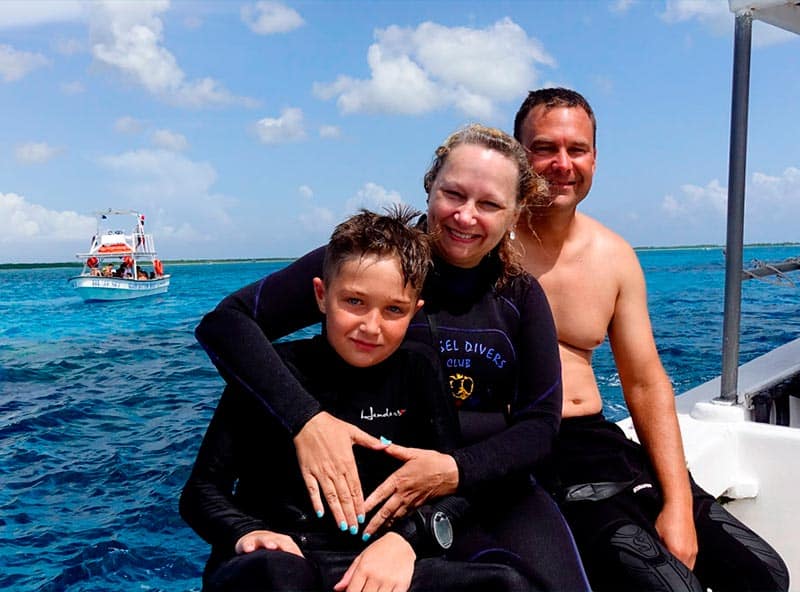
A real-world example: Dressel Divers. Dressel Divers has run family scuba programs across the Caribbean for more than 30 years, and operates the junior and Discover Scuba Diving programs referenced throughout this guide at the resorts and destinations covered below. We work with hotel kids’ clubs (Iberostar’s Star Camp, for instance) so that non-diving siblings have something engaging to do while the rest of the family is in the water, and our instructors are trained specifically in teaching children and managing mixed-age family groups, not just experienced adult divers.
4. The Benefits of Family Scuba Diving
There’s no better way to spend quality time together than doing something exciting as a team. Family scuba turns diving into a shared family moment, not “Dad goes diving, Mom stays on the lounge chair, and the kids stare at their phones.” Here’s what families consistently get out of it:
- Shared memories that last. Seeing your kid’s face light up underwater, holding your partner’s hand past a shipwreck, grandpa showing a grandchild how to breathe calmly, these become the stories told at dinner for years.
- Real-world learning. Kids learn about coral reefs, fish behavior, and turtles directly, in context, rather than from a textbook or a screen.
- Teamwork and trust. Diving requires a buddy system. Your kid becomes your buddy-check partner, and you become theirs, a dynamic that builds communication and trust that carries over onto dry land.
- A genuine break from screens. There’s no signal underwater. For an hour at a time, it’s just bubbles, fish, and your family, fully present with each other.
- Life skills. Diving teaches discipline, patience, and self-control, qualities that tend to show up in other areas of a child’s life too.
- More than a sport: Conservation education Family diving is not just leisure—it is the best marine biology class in the world. In destinations like Bayahibe (Dominican Republic), children learn about coral restoration. Seeing with their own eyes the difference between a damaged reef and a restored one, or taking part in species identification, turns children into small “ocean ambassadors.” This responds to the needs of families who value meaningful learning during their holidays.

5. What Can Non-Divers Do While the Family Dives?
Not everyone in the family needs to be certified, or even wants to be, for a family diving holiday to work. Here’s what typically happens to non-diving members while the rest of the group is underwater:
- Snorkeling at the same reef, same time. A snorkeling guide accompanies non-divers on the surface directly above the dive site, so the family is still together in the water, just at different depths.
- Shore-based snorkeling trips to calm, shallow reefs designed for beginners and young children.
- Kids’ clubs at the resort, running structured activities, crafts, games, mini-courses on marine conservation, timed to overlap with the dive schedule.
- Boat-based activities like sunrise catamaran trips, parasailing, or banana boats, often bundled into the same excursion as the dive.
In other words, family diving holidays don’t require everyone to dive. They require everyone to be included, each at their own comfort level.
6. The Caribbean: A Family Diving Paradise
When people search for the best family vacation dive sites, the Caribbean consistently tops the list, crystal-clear water, shallow reefs, calm conditions, and a high concentration of operators experienced with kids.
Comparison: Best Family Diving Destinations in the Caribbean with Dressel Divers
Minimum ages reflect general industry standards for Discover Scuba Diving and Junior Open Water certification; confirm exact depth limits and requirements with your chosen operator, as they vary by site and dive agency.
Cozumel: Next-Level Family Diving
Cozumel is a classic, and it’s hard to beat for family diving in the Caribbean, spectacular reefs, calm waters, and dives that leave right from the dock. At the Iberostar Cozumel, kids stay engaged at the Star Camp with recycling workshops, puppet shows, and educational games while the rest of the family dives. Dressel Divers runs Junior Open Water, Junior Advanced, and Junior Rescue courses here, with all equipment adapted for kids.
Riviera Maya: Diving, Cenotes, and Much More
If your family likes combining Caribbean diving with land adventures, the Riviera Maya delivers. Teens can explore the cenotes, caverns lit by beams of natural light, while younger kids start at gentler sites like Jardines Reef or Punta Piedra. At the Iberostar Paraíso Lindo and Ibetostar Quetzal in Playa del Carmen, kids tackle obstacle courses and recycling activities at a Star Camp built with recycled plastic; at the Barceló Maya Beach in Puerto Aventuras, there’s a Kids Club with an 18-hole mini golf course. Add sunrise catamaran rides and parasailing, and it functions as a full family resort, above and below the water.
Montego Bay: Jamaica Dives Too
The Montego Bay Marine Park has successfully restored its reef, and you’ll now find turtles, nurse sharks, lobsters, and large schools of fish in shallow water that’s ideal for kids and beginners. The Iberostar Rose Hall Beach runs a Star Camp with MasterChef competitions and karaoke contests, plus babysitting if parents want a quiet dinner. Dive sites like Airport Wall, Coral City, and the Luminous Lagoon round out a destination where the whole family, including kids working toward certification, can get in the water.
Bayahibe: Family Diving with a Purpose
Bayahibe stands out for families who want to combine diving with genuine conservation learning. At the Iberostar Selection Hacienda Dominicus, dive trips include reefs, a shallow wreck, Saona, Catalina, and visits to the FUNDEMAR coral lab, where kids see firsthand how coral is restored. On rest days, there’s a Star Camp, a kids’ pool, and island excursions to fill the time.
Punta Cana, Dominican Republic
Beyond the beaches, Punta Cana is a strong choice for families who want both diving and snorkeling. Shallow reefs and clear water make it forgiving for kids; young divers can start with a Bubble Maker program or the Junior Open Water course. Non-divers can snorkel at the calm, colorful Cabeza de Toro Marine Park, while resorts add kids’ clubs and water parks on land.
Bonaire, Dutch Antilles
Bonaire is built for easy, relaxed diving, many reefs are accessible directly from shore, so there’s no boat ride before the action starts. Visibility can reach up to 30 meters (100 feet), and turtles, seahorses, and parrotfish are common sights. Snorkeling spots at Lac Bay and Klein Bonaire suit all ages.
Curaçao
Curaçao blends diving, snorkeling, and land-based fun. Reefs are accessible from shore, and dive schools run courses designed specifically for kids. White-sand beaches like Playa Lagun and Playa Porto Mari offer calm, current-free snorkeling for little ones, while the Sea Aquarium and Christoffel National Park add land-based learning.
British Virgin Islands
Less crowded but just as spectacular, the BVI offers calm water, shallow reefs, and the RMS Rhone, a shipwreck that’s comfortable and approachable for families. Add kayaking and snorkeling at The Baths in Virgin Gorda for a destination that mixes nature with family time.
Roatán, Honduras
Roatán’s warm, clear water and well-preserved coral reef make it ideal for beginners and kids snorkeling for the first time. Family-friendly dive programs here include guided dives, dolphin encounters, and marine conservation activities that teach kids about coral protection in a hands-on way.

7. Diving with Grandparents: A Multigenerational Adventure
Three-generation dive trips are increasingly common, especially among North American families, and they come with their own set of questions.
- Can grandparents still dive? Age alone isn’t a barrier to diving, what matters is general fitness.
- What if it’s been years since their last certification? A refresher course (sometimes called a scuba review) lets previously certified divers rebuild confidence and skills in shallow water before joining the family on an open-water dive.
- How do you manage different skill and comfort levels across generations? The same model used for kids applies here: divers and snorkelers can explore the same reef at the same time, at their own depth and pace, with a guide for each group.
- What about logistics? Look for resorts with activities that work for every generation simultaneously, a kids’ club for grandchildren, a calm reef for grandparents easing back into diving, and open-water sites for parents who dive regularly.
The goal for a multigenerational trip isn’t getting everyone to the same skill level. It’s making sure everyone, from grandchild to grandparent, has a way to be part of the same experience.
8. How to Plan a Family Diving Holiday, Step by Step
- Decide who’s diving and who’s snorkeling. This determines which resorts and operators will fit your family, since not all of them run parallel snorkeling programs.
- Check minimum ages and certifications needed for each family member, based on the table above.
- Choose a destination with shore or short-boat-ride access if you’re traveling with younger kids, to minimize time spent getting to the dive site.
- Book a stay-and-dive package that bundles accommodation, courses, and excursions, rather than arranging each piece separately.
- Confirm equipment sizing for kids in advance with the operator, rather than assuming standard gear will fit.
- Build in non-diving days or half-days for kids’ clubs, snorkeling, or land excursions, especially on a trip longer than four or five days.
- Ask about refresher courses if any adults in the group haven’t dived in the last year or two.

9. FAQs About Family Diving
At what age can kids start diving?
Kids can typically try a Discover Scuba Diving experience from age 8 and pursue a Junior Open Water certification from age 10, using kid-sized gear such as smaller vests and shorter regulators.
What if we’ve never dived before?
The whole family can start together with a Discover Scuba Diving experience and progress from there; already-certified family members can join a refresher course to get back up to speed alongside first-timers.
Are there full family diving vacation packages?
Yes, stay-and-dive packages bundling accommodation, courses, and excursions are widely available, and most operators will customize one if a standard package doesn’t fit your family.
What if we just want to snorkel?
Family snorkeling packages exist specifically for this, with no diving gear or certification required.
How suitable is diving with kids?
Family diving with a certified, family-experienced operator is suitable due to age-based depth limits, kid-sized equipment, low instructor-to-student ratios, and constant in-water supervision during junior and Discover Scuba Diving programs.
Can grandparents dive too?
Yes, age isn’t a disqualifier on its own; what matters is general fitness and medical clearance, which apply to divers of any age.
How do I plan a family dive adventure or book a trip?
Easy.
Just contact us and we’ll create your family diving plan in no time, fully customized.
A diving vacation just the way you always imagined.
And yes, get ready for the most epic family photos of your life.
CONTACT US FOR
PERSONALIZED ASSISTANCE
Ready to improve your dive skills?
Need more information about the next certification level?
WE ARE HERE TO HELP