
Good Ocean Documentaries: 11 Best Ocean Documentaries to Watch If You Love Marine Life
04/11/2026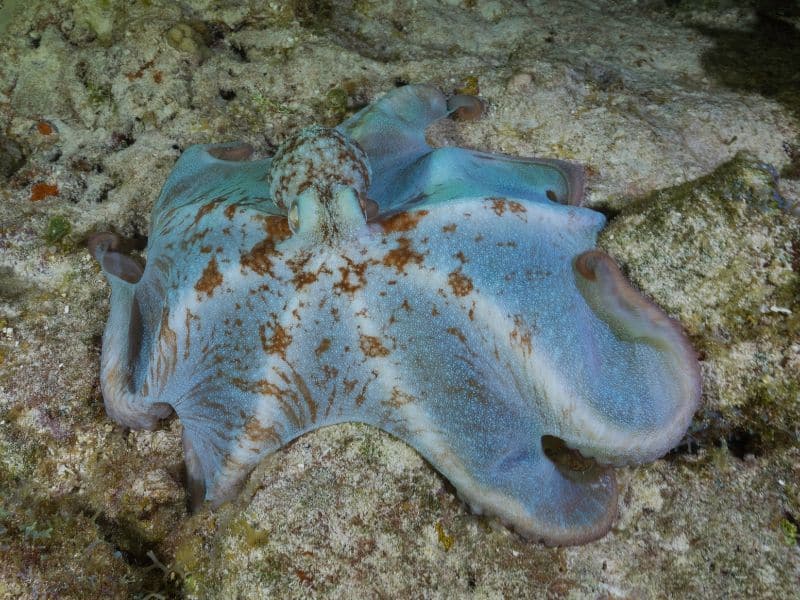
Here’s a fun fact to kick things off: we have better maps of the surface of Mars and the Moon than we do of the seafloor on our own planet (between 20% and 28.7%). Only about a quarter of the ocean floor has been mapped in high resolution, leaving much of the underwater world as one giant blank spot.
That’s why ocean mysteries never run out. Some are genuine scientific puzzles researchers are still trying to solve. Others have turned out to be even stranger than the legends built around them. This countdown covers both kinds, from glowing animals to a sound that spooked researchers for years. And it tells you which ones you might actually glimpse on a scuba dive.
Think of it as ten fascinating secrets of the underwater world, minus the sea monsters and plus a lot of real science that is somehow even weirder. If you love ocean mysteries, pull up a chair.
2. Ocean Mysteries at A Glance
3. Deep Ocean Mysteries: What’s Still Waiting to Be Discovered?
4. Why Do Some Marine Animals Glow in The Dark?
5. How Do Sea Turtles Find Their Way Across the Ocean?
6. Deep Ocean Mysteries and Wonders: What Lives at The Very Bottom?
7. Why Do Some Fish Disappear Right in Front of You?
8. What Makes Sharks Such Mysterious Ocean Predators?
9. Pacific Ocean Mysteries: What’s Hiding Beneath the Biggest Ocean?
10. How Do Coral Reefs Support Whole Underwater Worlds?
11. Why Do Some Underwater Sounds Remain Unexplained?
12. Unsolved Ocean Mysteries: What Are Scientists Still Trying to Solve?

1. The Quick Version
- Much of the deep sea remains unexplored, and scientists are still discovering new marine species.
- Many marine animals produce their own light, although researchers are still investigating exactly how and why this ability evolved.
- Sea turtles use Earth’s magnetic field as one of several navigation cues.
- Some famous ocean mysteries have been solved. The “Bloop” is one of them.
- Some important unanswered questions involve animals whose breeding behavior has rarely or never been observed in the wild.
- You can’t scuba dive to the bottom of an ocean trench, but a reef wall can give you a glimpse into the deep blue.
2. Ocean Mysteries at A Glance
| Mystery | What scientists know | What’s still unknown |
| Deep-sea species | Thousands of marine species have been described. | How many more remain undiscovered. |
| Bioluminescence | Many animals produce light through chemical reactions. | How the ability evolved and what it does in every species. |
| Sea turtle navigation | Turtles use Earth’s magnetic field and other environmental cues. | How they combine those signals to navigate so precisely. |
| Deep-sea life | Specialized animals survive extreme pressure and darkness. | How much life and how many ecosystems remain undocumented. |
| Camouflage | Marine animals use color, texture, shape, and behavior to blend in. | The full range of adaptations and how different species use them. |
| Shark migrations | Tracking has revealed many migration routes. | Why some sharks follow particular routes and how conditions influence them. |
| Pacific seafloor | The Pacific contains trenches, volcanoes, and hydrothermal vents. | What remains to be found in poorly mapped areas. |
| Coral reef ecosystems | Reefs support complex relationships between marine species. | How those relationships respond to environmental change. |
| Underwater sounds | Hydrophones record geological, biological, and human-made sounds. | How to identify the source of every unfamiliar recording. |
| Unobserved animal behavior | Researchers have identified important breeding and migration patterns. | Some behaviors and life stages remain difficult to observe directly. |
3. Deep Ocean Mysteries: What’s Still Waiting to Be Discovered?
Short answer: Scientists have described roughly 240,000 marine species, but the actual total is uncertain and could be considerably higher.
Picture a place with no sunlight, crushing pressure, and animals that carry their own flashlights. Welcome to the deep sea, where things get properly weird.
Take the giant squid. For centuries, it was known mostly from washed-up carcasses and sailors’ tales. Scientists didn’t film one alive in its natural deep-sea habitat until 2012. Or take the megamouth shark, an even better plot twist: a shark with an enormous mouth that science didn’t know existed until one became entangled in a Navy ship’s sea anchor off Hawaii in 1976.
The mystery: How many species are still out there? Estimates vary because they depend on how scientists define a species and how much of the deep sea has actually been sampled. It’s one of the simplest questions to ask and one of the hardest to answer.
You don’t need a submersible to appreciate how much marine life remains hidden. Reefs have plenty of surprises, too. Cozumel’s splendid toadfish (Sanopus splendidus) lives nowhere else on Earth and spends much of its time tucked beneath coral ledges. You could swim right past one unless your guide knows where to look.

4. Why Do Some Marine Animals Glow in The Dark?
Short answer: They produce light through a chemical process called bioluminescence. In many species, this involves a molecule called luciferin reacting with oxygen, often with help from an enzyme.
Glowing animals sound like science fiction. Yet in the open ocean, bioluminescence is surprisingly common.
Anglerfish use glowing lures to attract prey. Some fish produce light on their undersides, helping conceal their silhouettes from predators looking up. Certain squid release glowing clouds, the underwater version of a smoke bomb. And when you move your hand through water containing bioluminescent plankton, the water can sparkle as if someone spilled glitter.
One quick distinction, because people often mix these up: bioluminescence is light an organism produces. Biofluorescence is different. It happens when an organism absorbs light, such as blue light, and re-emits it in another color, such as green or red. Different trick, equally cool.
The mystery: Scientists understand many of the chemical processes behind bioluminescence, but they are still investigating how the ability evolved in different groups of animals and exactly what purpose it serves in every species. Light can attract prey, confuse predators, help animals communicate, or make them less visible.
You can sometimes experience this phenomenon on a night dive. Turn off your light in the right spot, move your hand through the water, and you may see tiny sparks.
“May” is doing real work in that sentence. It depends on the conditions and the plankton present, so no night dive can promise a light show. Dressel Divers offers night dives at selected locations, including Cozumel and Jamaica. Ask the Dive Center team what conditions are like and what you might expect on a particular evening.
5. How Do Sea Turtles Find Their Way Across the Ocean?
Short answer: They combine several navigation cues, and Earth’s magnetic field is an important one. Think of it as a built-in navigation system.
Green and hawksbill sea turtles can travel long distances through open water. Some return to the regions where they hatched to nest, sometimes decades later. This behavior is known as natal homing.
Researchers have found that sea turtles can detect aspects of Earth’s magnetic field, including its intensity and inclination. These magnetic signatures vary geographically and can help turtles orient themselves. Other cues, including smell and visual information, may also play a role.
The mystery: How does a turtle combine all those clues into a route across thousands of miles? It’s unlikely to rely on a single compass. It’s more like a navigation toolkit, and researchers are still working out how the different signals are coordinated.
Sea turtles are many times spotted on scuba dives around Cozumel’s reefs and along the Riviera Maya. Sightings are never scheduled, of course. When one glides past, remember that it may be partway through a journey far bigger than your dive site.
6. Deep Ocean Mysteries and Wonders: What Lives at The Very Bottom?
Short answer: Specially adapted animals, including giant amphipods and snailfish, live in the deepest ocean trenches, where pressure is more than 1,000 times greater than at the surface.
The Mariana Trench in the western Pacific contains Challenger Deep, the deepest known point in the ocean, at approximately 36,000 feet (11,000 meters). Drop Mount Everest in there, and its peak would still be more than a mile underwater.
It’s pitch black and close to freezing. And yet, life exists there. Some deep-sea animals use a molecule called TMAO to help their proteins function under extreme pressure. It’s a little like having built-in protection at the cellular level.
Then there are hydrothermal vents. In 1977, scientists exploring near the Galápagos Islands discovered hot springs on the seafloor surrounded by giant tube worms, clams, and crabs. These ecosystems existed in total darkness and did not depend on sunlight for their energy. Instead, microbes converted chemicals such as hydrogen sulfide into usable energy through a process called chemosynthesis.
Biology textbooks needed a rewrite.
The mystery: What else is waiting in the deepest parts of the ocean? Every expedition using remotely operated vehicles and crewed submersibles adds new details. And every new detail raises more questions.
Let’s be clear: recreational scuba diving doesn’t go anywhere near these depths. Many recreational training agencies set a maximum depth of 130 feet (40 meters), a tiny fraction of the ocean’s full depth.

7. Why Do Some Fish Disappear Right in Front of You?
Short answer: Camouflage. Marine animals use color, texture, shape, and behavior to blend into their surroundings, and some are astonishingly good at it.
The octopus is one of the masters. Its skin contains cells called chromatophores, along with other structures that reflect and scatter light. Controlled by its nervous system, these features allow it to change color and appearance remarkably quickly.
The stonefish takes a different approach. It looks like a moss-covered rock, which is quite a trick when you consider that it is also among the most venomous fish in the sea. Scorpionfish play a similar game.
(Lesson learned: Never touch anything on the reef).
The mystery: How can an animal sit in plain view and still be almost invisible? Camouflage takes advantage of the way visual systems interpret shape, contrast, color, and movement. What looks obvious to the animal may be almost impossible for us to spot.
This is where an experienced Divemaster or Dive Instructor earns every bit of their expertise. They may point out a tiny seahorse clinging to a sea fan or a toadfish tucked beneath a ledge, animals you might otherwise swim right past.
Spotting hidden marine life is one of the simplest ways to make a scuba dive more rewarding. Next time you look at a patch of coral and see nothing, look again.
8. What Makes Sharks Such Mysterious Ocean Predators?
Short answer: Their sensory abilities are extraordinary. Sharks have been around for more than 400 million years, giving them a very long time to develop and refine their adaptations.
Beyond their well-known sense of smell, sharks detect movement through a sensory system called the lateral line. They also have ampullae of Lorenzini: small, gel-filled sensory organs around the head that detect weak electrical fields produced by other animals.
These abilities help sharks locate prey, even when it is difficult to see.
The mystery: Why do some sharks follow particular migration routes, and how do changing ocean conditions influence their movements? Tracking technology has taught researchers a great deal, but there is still plenty to learn about shark behavior and migration.
If seeing a shark is on your wish list, learn about the species first. Movies make for terrible research, and understanding real shark behavior makes these encounters far more interesting than a jump scare.
Every year, roughly from December through mid-March, female bull sharks gather in the waters off Playa del Carmen. Researchers continue to study the factors behind these seasonal gatherings. Food availability and environmental conditions are among the aspects considered.
Dressel Divers offers guided bull shark excursions during the season. Certification and logged-dive requirements apply, so check the current requirements with the Dive Center before booking. And remember: these are wild animals. Sightings can never be guaranteed.
9. Pacific Ocean Mysteries: What’s Hiding Beneath the Biggest Ocean?
Short answer: Volcanoes, trenches, underwater mountains, and hydrothermal vents, many in areas that remain poorly explored.
The Pacific is home to some of the world’s most remarkable underwater geological features. Its seafloor includes extensive volcanic areas associated with the Ring of Fire, as well as deep trenches and underwater mountain ranges.
At hydrothermal vents known as black smokers, superheated fluid can reach temperatures of more than 700°F (about 400°C) before mixing with the surrounding seawater. It doesn’t boil in the same way it would at the surface because of the enormous pressure.
Nearby, giant tube worms (Riftia pachyptila) survive without a mouth or digestive tract. Instead, they depend on symbiotic bacteria living inside their bodies to produce nutrients from chemicals in the vent environment.
The mystery: What else is hidden across the Pacific’s vast seafloor? With so many areas still poorly mapped and sampled, the honest answer is that researchers have plenty left to investigate.
The Caribbean, where Dressel Divers operates, is a different underwater world: warm, sunlit reefs where photosynthesis supports much of the ecosystem. You won’t find black smokers on a Caribbean reef dive, but you will find a remarkable variety of marine life and underwater landscapes.

10. How Do Coral Reefs Support Whole Underwater Worlds?
Short answer: Coral reefs cover less than 1% of the ocean floor but support an estimated quarter of marine species, thanks to a complex network of relationships between organisms.
Coral isn’t a rock. It’s made up of tiny animals called polyps, many of which live in partnership with microscopic algae known as zooxanthellae. The algae use sunlight to produce energy, while the coral provides them with shelter.
Around them, fish, shrimp, sponges, crabs, and countless other organisms form a busy network of relationships. Cleaner shrimp set up stations where fish come to have parasites removed. Parrotfish graze on coral. Small fish find shelter among coral branches.
Reefs even have a soundtrack. Healthy reef environments produce a constant mix of clicks, crackles, and pops from snapping shrimp and other marine animals. Research suggests that sound can help some young fish and coral larvae locate suitable reef habitats.
A reef isn’t just a pretty view. It’s a noisy neighborhood.
The mystery: How do all these interactions add up, and what happens to the whole network when environmental conditions change? Scientists are still investigating how reef ecosystems respond to warming water, ocean acidification, and habitat loss.
When, you scuba dive the Mesoamerican Reef, the second-largest barrier reef system in the world, you’re floating above that web of activity.
Pick one spot and watch for five minutes. A goby defending its burrow, a shrimp moving between coral branches, or a parrotfish grazing on algae. The reef starts to feel like a city, with every resident doing something.
11. Why Do Some Underwater Sounds Remain Unexplained?
Short answer: Sound travels about four times faster in water than in air, at roughly 1,500 meters per second. It can travel across enormous distances, which means an unusual recording may have originated far from the hydrophone that detected it.
That makes underwater sound a fascinating source of scientific questions. Researchers use hydrophones, essentially underwater microphones, to record whales, earthquakes, volcanic activity, ships, and other sounds.
The most famous example is the “Bloop.”
In 1997, NOAA hydrophones in the Pacific recorded an extremely low-frequency sound detected by sensors thousands of miles apart. The internet went wild with theories about a giant undiscovered creature.
The real explanation, according to NOAA, was less monstrous but still dramatic: the sound was consistent with an icequake associated with large ice formations breaking apart near Antarctica.
That makes the Bloop one of the best-known solved ocean mysteries. It’s also a reminder that an unfamiliar sound doesn’t automatically mean an unknown animal.
The mystery: How do researchers identify the source of a sound that has traveled hundreds or thousands of miles? They compare recordings from different hydrophones, analyze acoustic patterns, and consider geological, biological, and human-made explanations.
You can hear a much smaller version of this underwater. A reef is not quiet. The crackling comes partly from snapping shrimp, while the crunching sound can come from parrotfish scraping algae off coral.
Even a shallow reef has a soundtrack.
If you want to watch real underwater research, NOAA Ocean Exploration publishes footage from remotely operated vehicle expeditions. It’s a great way to see scientists investigating the seafloor without confusing a live research stream with a documentary episode.
12. Unsolved Ocean Mysteries: What Are Scientists Still Trying to Solve?
Short answer: Some of the biggest unanswered questions are not about monsters or strange sounds. They’re about how life works across our planet’s oceans.
Here are five questions researchers are still investigating:
- How many marine species haven’t we found? The total number remains uncertain, and estimates depend on the methods scientists use and the habitats they study.
- What’s happening in the ocean twilight zone? Between roughly 650 and 3,300 feet (200 to 1,000 meters) down, enormous numbers of animals move toward the surface at night and return to deeper water during the day. This daily movement, known as diel vertical migration, is considered one of the largest migrations on Earth. It also plays an important role in moving carbon through the ocean.
- Where do some animals breed? Take the European eel. Scientists have traced its life cycle to the Sargasso Sea, where the young are found. However, directly observing adult eels spawning in the wild has remained exceptionally difficult.
- Why do some corals tolerate heat better than others? Researchers are studying why certain coral colonies appear more resilient to warming water and what that could mean for reef conservation.
- How will ocean ecosystems respond to environmental change? Warming, acidification, and habitat loss interact in complicated ways. Predicting their combined effects remains a major scientific challenge.
None of these questions needs a sea monster to be interesting. And as the story of the Bloop shows, progress comes from observation and evidence, not from things that merely look mysterious.
Every answer tends to open up another question. That’s one reason the ocean remains so fascinating.

13. Ocean Mysteries You Can Actually See While Scuba Diving
You don’t have to descend into an ocean trench or board a research submersible to find something amazing.
Some of the biggest scientific questions are far beyond recreational scuba diving. But plenty of fascinating things happen right on the reef: camouflaged fish, busy cleaning stations, turtles on the move, and, on the right night, glowing plankton.
These are the encounters that make you slow down, look closer, and realize how much is happening underwater.
Dressel Divers operates Dive Centers across the Caribbean, including Cozumel and Puerto Aventuras, Playa del Carmen and Playa Paraiso in Mexico, Bayahibe and Punta Cana in the Dominican Republic, and Montego Bay and Lucea in Jamaica. With more than three decades of experience, professional Dive Instructors and Divemasters, and Free Nitrox for certified divers at participating locations, Dressel Divers helps guests get more out of the underwater world.
Whether you’re already certified or brand new to scuba diving, the Dive Center team can help you find an excursion that matches your interests and certification level.
No excursion can guarantee a specific animal encounter. The experience depends on the dive site, conditions, and which marine life happens to be around that day. That’s part of the appeal.
Here’s a quick guide to matching some of these underwater phenomena with real scuba diving experiences. Always confirm current schedules, depths, and requirements with the Dive Center.
| Phenomenon | What’s behind it | Can you see it while scuba diving? | Where to find it |
| Bioluminescence | Light produced by chemical reactions in plankton and marine animals. | Nighttime excursion. It can be seen while swimming and during night dives. | Falmouth Lagoon, Jamaica. Cozumel, Bayahibe, and Jamaica for scuba diving. |
| Wall Dives | The edge of a reef that drops away into deep water. | Yes. | Cozumel: Santa Rosa Wall and Columbia Reef. |
| Bull Sharks | Seasonal gatherings of female bull sharks (mid-November to mid-March). | Yes, although sightings cannot be guaranteed. | Playa del Carmen. |
| Cenotes | Flooded limestone formations, sometimes with distinct layers of water. | Yes, on guided excursions. Snorkeling is also possible. | Riviera Maya and the Puerto Aventuras area. |
| Camouflage | Adaptations in color, shape, texture, and behavior found in different animals. | Yes. | Cozumel, Bayahibe, Montego Bay, and other reefs. |
Ready to see what’s happening beneath the surface? Find your next scuba diving experience with Dressel Divers and see what the Caribbean has waiting for you.
14. Frequently Asked Questions About Ocean Mysteries
What are the biggest ocean mysteries?
Some of the biggest ocean mysteries include how many marine species remain undiscovered, how deep-sea ecosystems work, how animals navigate across entire oceans, and how marine life communicates. Scientists have explained many once-puzzling phenomena, but plenty of important questions remain open.
What are some unexplained ocean mysteries?
Researchers are still investigating deep-sea biodiversity, long-distance animal navigation, the ocean twilight zone, and the behavior of marine species that are difficult to observe in the wild. One example is the European eel, whose spawning behavior in the Sargasso Sea has been exceptionally difficult to witness directly.
Which ocean mysteries have been solved?
Several famous mysteries have scientific explanations. The “Bloop,” for example, was attributed to an icequake near Antarctica. Hydrothermal vent ecosystems, once an unexpected discovery, are now much better understood. Solving one mystery often reveals another question worth investigating.
What is the deepest part of the ocean?
Challenger Deep, in the Mariana Trench in the western Pacific, is the deepest known point in the ocean. It is approximately 36,000 feet (11,000 meters) deep, although exact measurements vary depending on the survey and method used.
Are there still unknown creatures in the ocean?
Yes. Scientists continue to describe new marine species, particularly in deep-sea habitats that are difficult to reach and study. The exact number of species still waiting to be discovered remains uncertain.
What animals make their own light underwater?
Many marine organisms produce light through bioluminescence. They include anglerfish, lanternfish, certain squid, jellyfish, comb jellies, and plankton such as dinoflagellates. Depending on the species, the light can attract prey, distract predators, or help with communication.
Can scuba divers discover ocean mysteries?
Yes, within recreational diving limits. Scuba divers can observe camouflage, reef ecosystems, animal behavior, and sometimes bioluminescence on a night dive. The deepest ocean trenches are far beyond recreational diving, but the reefs offer plenty of fascinating marine life and natural phenomena to observe. What you see depends on the site, conditions, and marine life present that day.
CONTACT US FOR
PERSONALIZED ASSISTANCE
Ready to improve your dive skills?
Need more information about the next certification level?
WE ARE HERE TO HELP